Zamseed – Yield Improvement Centre (YIC)
Evaluation of maize, sorghum and millet varieties for silage production — Moffat Jere
Introduction
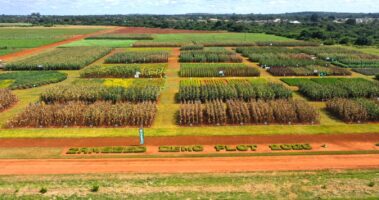
A silage evaluation trial was conducted at YIC during the 2025/26 season to assess the performance of maize, sorghum and pearl millet varieties for silage production. The objective was to identify varieties with superior silage characteristics for yield while generating information to support variety development and recommendations for silage production. Twenty (20) entries, comprising Zamseed maize hybrids, competitor maize checks, forage sorghum hybrids and pearl millet varieties, were evaluated using a Randomized Complete Block Design (RCBD) with two (2) replications. The primary parameters measured included fresh biomass yield, dry matter percentage, dry matter yield, plant height, leaf area and days to harvest. Data were analysed using Genovix statistical software, with analysis of variance (ANOVA) used to determine differences among varieties.
This report presents the preliminary field results based on agronomic performance and yield data. Laboratory analyses to determine silage quality and fermentation characteristics are yet to be done. Therefore, the findings and conclusions presented in this report are preliminary and will be supplemented once the laboratory results become available.
Results and discussion
The trial revealed significant differences among varieties for dry matter percentage, dry matter yield and fresh biomass yield, indicating substantial genetic variation for silage production potential.
Dry matter yield
Dry matter yield is one of the most important indicators of silage productivity because it represents the amount of usable feed harvested per hectare.
As shown in the summary table below, ZMS721 recorded the highest dry matter yield (15.5 t/ha), followed closely by SC719 (15.1 t/ha), ZMS720 (14.7 t/ha), DK7500 (14.1 t/ha) and ZMS451 (14.0 t/ha). Interestingly, although ZMS721 produced the highest dry matter yield, it ranked much lower for fresh biomass yield. This suggests that the variety accumulates a higher proportion of structural material, resulting in higher dry matter concentration.
Fresh biomass yield
Commercial competitor varieties generally outperformed Zamseed materials in fresh biomass production. However, high fresh weight yield indicates the plant has a high water content and is less desirable for silage utilisation by animals.
PAN 7M81 recorded the highest fresh biomass yield (51.1 t/ha), closely followed by DK7500 (50.9 t/ha), DK777 (49.6 t/ha) and SC719 (46.6 t/ha). Among Zamseed entries, ZMS451 (43.9 t/ha), ZMS550Y (44.6 t/ha) and ZMS621 (45.4 t/ha) produced competitive fresh biomass yields.
The scatter plot comparing fresh biomass and dry matter yield (see the full report) clearly demonstrates that SC719 and DK7500 combine both high fresh biomass and high dry matter production, making them strong commercial competitors. However, ZMS721 excelled in dry matter yield, which is a key important characteristic for silage production and utilisation.
Sorghum and millet performance
The forage sorghum hybrids (FSH18 and FSH20) performed well, recording dry matter yields of 14.0 and 13.6 t/ha respectively, with excellent dry matter percentages (39–40%). These hybrids demonstrated good potential as alternative silage crops, particularly where drought tolerance and forage quality are priorities.
Among the millet entries, Forage Pearl Millet produced acceptable biomass and dry matter yields, whereas Okashana Millet recorded the poorest overall performance and is unlikely to be suitable for commercial silage production under the conditions of this trial.
Agronomic observations
Leaf area, plant height and maturity differed considerably among varieties, although not all differences translated directly into higher silage yield. Large leaf area alone did not guarantee greater dry matter production, indicating that biomass partitioning and dry matter accumulation are equally important in determining silage productivity.
Conclusion
The trial successfully identified several high-performing materials for silage production. ZMS721 emerged as the highest dry matter yielding Zamseed variety, while ZMS451 also demonstrated balanced performance with competitive fresh biomass and dry matter production. The forage sorghum hybrids also performed well and need further evaluation.
However, the competitor checks SC719 and DK7500 combined high fresh biomass with high dry matter yield. These varieties currently set a strong benchmark for silage production and should be considered reference standards in future evaluations.
Recommendations
- Next season, reduce the number of varieties and include some agronomic options such as different plant populations and time of cutting to evaluate these effects on silage dry-matter yield.
- Repeat the silage trial across two contrasting environments next season to validate the performance and adaptability of the evaluated varieties before making definitive recommendations.
- Continue evaluating best-performing Zamseed entries alongside leading competitor checks (SC719 and DK7500) in the follow-up trial to benchmark performance and identify varieties with consistent silage production potential.
- Include laboratory analyses to determine silage quality and fermentation characteristics, including digestibility, starch and crude protein, to complement yield data.
Silage Trial 2026 result table
| Variety | Dry matter | Dry matter yield (t/ha) | Fresh weight yield (t/ha) | Fresh weight rank | Leaf area (cm²) | Days to harvest | Plant count per plot | Plant height (cm) |
|---|---|---|---|---|---|---|---|---|
| ZMS721 | 40% | 15.5 | 39.2 | 12 | 864 | 96 | 48 | 295 |
| SC719 | 33% | 15.1 | 46.6 | 5 | 943 | 112 | 47 | 320 |
| ZMS720 | 38% | 14.7 | 38.7 | 13 | 887 | 112 | 46 | 220 |
| DK7500 | 28% | 14.1 | 50.9 | 2 | 884 | 101 | 49 | 280 |
| ZMS451 | 33% | 14.0 | 43.9 | 10 | 786 | 103 | 49 | 285 |
| FSH18 | 40% | 14.0 | 35.6 | 16 | 886 | 92 | 122 | 325 |
| FSH20 | 39% | 13.6 | 34.7 | 17 | 897 | 107 | 127 | 295 |
| ZMS550Y | 31% | 13.6 | 44.6 | 8 | 890 | 103 | 49 | 245 |
| DK777 | 28% | 13.5 | 49.6 | 3 | 847 | 104 | 49 | 275 |
| GOOD DR | 28% | 12.8 | 46.5 | 6 | 862 | 101 | 48 | 275 |
| PAN 7M81 | 25% | 12.3 | 51.1 | 1 | 897 | 100 | 49 | 300 |
| FP MILLET | 30% | 11.4 | 38.4 | 14 | 845 | 101 | 157 | 305 |
| ZMS621 | 26% | 11.3 | 45.4 | 7 | 827 | 105 | 47 | 305 |
| ZMS703 | 25% | 11.1 | 43.9 | 9 | 1022 | 99 | 48 | 300 |
| ZMS608Y | 30% | 9.9 | 33.3 | 18 | 778 | 110 | 48 | 280 |
| ZMS612Y | 28% | 9.0 | 32.6 | 19 | 862 | 92 | 47 | 245 |
| ZMS638 | 22% | 8.9 | 41.4 | 11 | 842 | 98 | 47 | 234 |
| PHB 30G19 | 19% | 8.7 | 49.2 | 4 | 830 | 102 | 47 | 305 |
| SIMA | 21% | 7.8 | 37.2 | 15 | 842 | 101 | 124 | 290 |
| MILLET OK | 28% | 4.7 | 17.3 | 20 | 518 | 112 | 158 | 200 |
| Mean | 29% | 11.8 | 41.0 | 850 | 102 | 70 | 279 | |
| LSD | 7% | 4.5 | 9.5 | 210 | 22 | 20 | 65 | |
| C.V. | 11.5% | 17.2% | 10.5% | 11.2% | 9.8% | 13.2% | 10.6% | |
| Heritability | 0.74 | 0.60 | 0.75 | 0.33 | 0.95 | 0.45 | ||
| Prob. Entry | *** | *** | *** | *** | *** | *** | *** |