Maize is a crop that thrives under good growing conditions but which can also fail under poor management or harsh weather like heat and drought. The key for a farm manager is to improve yield stability, so that even under difficult growing conditions there will be a harvest. This harvest may not be the best, but at least sufficient to meet basic needs and cover costs. Here are a few key points for improving yield stability of maize.
Suitability of area and soil type
Every crop has an ideal environment in which to grow, related to the soil health, rainfall and season temperatures. To improve maize yield stability avoid growing maize in marginal areas, poor soils and in risky environments. Good soil health is the basis of crop production. Therefore, make every effort at conserving their soils and building soil health. This may be done by techniques such as mulching the soil surface and leaving crop residues on the field, applying organic manures and using direct sowing of crops. Avoid ploughing, burning of crop residues or remove crop residues from the field, all of which reduce the soil fertility and increase the erosivity of the soil. Soil health is also related to the level of acidity and balance of nutrients. A soil test will determine the acidity and composition of nutrients. Correcting these before the season will help to establish the crop in a conducive soil and thereby reduce nutrient stress while encouraging good growth.
Selection of best maize varieties
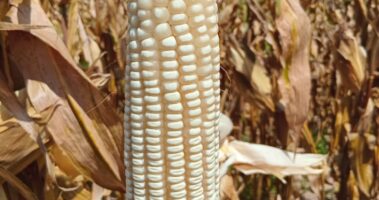
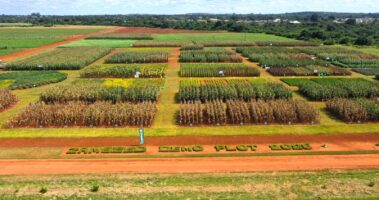
Zamseed has developed maize varieties which are resistant to diseases and are tolerant to drought and low soil fertility. Maize varieties that are more stress tolerant are highly desirable and are resilient in difficult environments. It is advisable to grow a selection of the best varieties suitable to the farm’s conditions. Plant an early, medium and late maturing varieties, with the greater proportion of the crop with the maturity applicable to your normal growing season. Thus, if you are growing in Region I, then half your crop should be an ultra-early maturing variety, one quarter with an early maturing variety and one quarter with a medium maturing variety. By planting different kinds of varieties one can reduce the risk of a poor harvest if an unseasonal drought occurs.
Management of crops
Maize does best on deep, well drained, fertile soils, and where the seasonal rainfall exceeds 500 mm. Maize is reasonably tolerant to soil acidity, but if the soil is very acid, liming will improve the soil and enhance maize yields. Maize is susceptible to both drought, especially during the flowering and early grain-filling stage. Thus, poorly drained soils should be avoided, unless practices like ridge tillage, drainage and early planting are employed. Drought during the four week period spanning flowering can cause serious yield losses, and therefore some form of water conservation is important (e.g., pot-holing, mulching, tied ridging), especially in drier areas. Conservation agricultural practices are vital in sustaining yield stability over a period of time. Maize should be planted as early as possible in the growing season in order to ensure a good yield. Crops should be well managed by weeding, fertilizing and spraying against any diseases or pests that might occur.
The practices, step by step
The above practices can be summarized in the following steps:
- Obtain inputs such as seed and fertilizer well before the start of the rainy season so that you can plant with the first substantial rains.
- Prepare planting holes early and cup-in the basal fertilizer and manure so that all fields are ready for planting before the first rains. The plant spacing should follow the recommendation for that particular area. In Region I, aim at an established plant population of 36,000 plants per ha (90 cm x 60 cm with 2 plants per station); in Region II, aim at 44,000 plants per ha (75 cm x 60 cm with 2 plants per station) and in Region II aim at 53,000 plants per ha (75 cm x 50 cm with 2 plants per station).
- At the beginning of the rainy season, after each rainfall, check the soil moisture status by digging in the field. Sow seed if the soil is wet down to 30 cm on clayey soils or 50 cm on sandy soils. If more than 35 mm of rain has fallen, plant as much as you can in one day and the stop until further rain is received.
- Dry planting a portion of the field may be an option to consider if the first rains seem to be delayed. In this case, ensure seed is placed into dry soil, and is at least 5 cm deep.
- Weed control, especially in the first six weeks of the crop’s life is essential. Weeds can be removed with a hoe or with appropriate herbicides.
- Rain-harvesting techniques must be employed as early as possible, e.g., mulching, pot-holing or tied-ridging.
- Top-dress with Ammonium Nitrate or Urea when the maize is 4 to 6 weeks old. The addition of manure and ash will greatly improve the response to the applied fertilizer. Urea fertilizer should preferably be applied on dry soil and be covered to minimize nitrogen loss.
- Check for stalk-borer and fall armyworm damage at 4 weeks after planting, and apply appropriate chemicals if damage is detected.
- Late weeds need to be controlled with herbicides or with the use of a hoe.
- Crops should be harvested as early as possible to reduce in-field losses.
- Conservation agriculture principles should be adhered to at all times. Maize should not be grown year after year in the same land but there should be crop rotation. Leguminous plants should preferably be planted in the season before maize in order to enrich the soil.
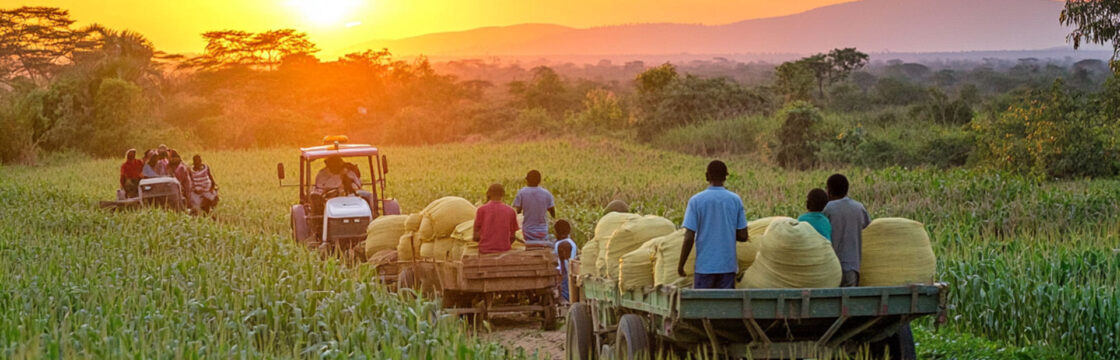
With well managed maize crops, following regenerative farming systems, yields will be stabilized and farmers will be able to sustain their farms for the good of future generations.